Donkey Talk: A Creative Script for Unconventional Communication
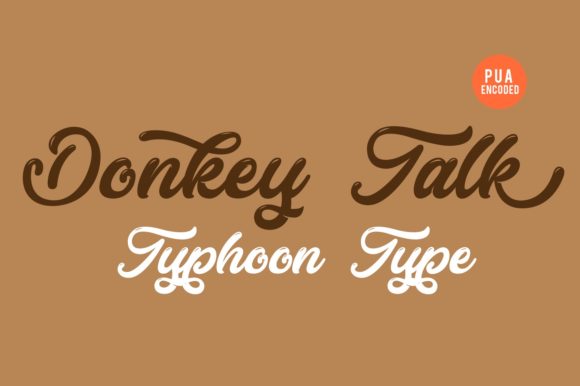
In the realm of creative tools and digital resources, you often stumble upon something that stands out not for its complexity, but for its unique character and approach. Donkey Talk is precisely that—a cool and fun script with a distinctive style that reimagines how we can handle text and communication in playful, yet practical ways. At its core, Donkey Talk isn't just another utility; it’s a framework or script designed to transform or process language in a manner that is both engaging and surprisingly useful for specific scenarios.
Understanding the Need for Creative Text Solutions
Many adults working in content creation, marketing, community management, or even personal projects face a common challenge: how to make standard communication more engaging. Repetitive social media posts, uniform chatbot responses, or bland automated messages can fail to capture attention. The goal is often to inject personality, humor, or a distinct tone into text-based interactions without sacrificing functionality. This is where a tool like Donkey Talk enters the picture. It addresses the need for automated or processed text that doesn’t sound robotic, but instead carries a unique, memorable flair.
Donkey Talk serves this need by applying its "cool and fun" style algorithmically. Imagine a scenario where you want an automated system to generate notifications, replies, or content variations that feel human and quirky. The standard approach might lead to generic output. Donkey Talk, with its unique style, offers a pathway to outcomes that are consistent yet creatively varied, helping to maintain user interest and brand personality.
How Donkey Talk Addresses Practical Communication Challenges
The primary value of Donkey Talk lies in its application to real-world situations where text needs a touch of character. For instance, consider a small business that uses automated email responses for customer inquiries. While efficiency is key, these messages can often feel cold. Implementing a script like Donkey Talk could allow the system to tailor responses with a playful, friendly tone—perhaps by rephrasing standard sentences in a more colloquial or humorous way—without requiring manual intervention every time.
Another common situation is content diversification. A blogger or social media manager might need to create multiple versions of a core message for different platforms. Donkey Talk can assist by generating stylistic variations of a base text, ensuring the core information is preserved while the presentation adapts to the informal vibe of a Twitter post versus the slightly more structured tone of a Facebook update. This helps in reaching broader audiences without diluting the message's intent.
Exploring Specific Applications and Outcomes
Let's delve into some concrete applications. One practical use of Donkey Talk is in community bots for platforms like Discord or Slack. These bots often perform simple tasks like welcoming new members or posting daily reminders. Using a standard script, the messages become predictable. Integrating Donkey Talk could transform these automated posts into fun, unexpected greetings or reminders that actually get read and appreciated, fostering a more vibrant community atmosphere.
For creative writers facing writer's block, Donkey Talk could serve as a brainstorming partner. By feeding a basic sentence or idea into the script, a writer might receive several stylistically different reinterpretations. This can spark new angles for a paragraph or dialogue, especially when aiming for a lighter, comedic, or offbeat section in a story. The outcome here is not fully automated content, but a creative catalyst that helps overcome stagnation.
In educational contexts, particularly for adult learning platforms aiming to keep material engaging, Donkey Talk could be used to reformulate quiz questions or instructional text in a more conversational style. This can reduce the dry feel of some e-learning modules and improve learner retention through a more relatable tone.
Recommendations for Implementing a Unique Script Style
If you're considering leveraging a tool like Donkey Talk, start by clearly defining your goal. Is it to enhance user engagement, to humanize automated communication, or to aid creative variation? Once the goal is set, identify the specific touchpoints where text is currently too generic. These might be system-generated emails, social media auto-posters, chatbot answer pools, or in-app notifications.
Implementation should be gradual. Test Donkey Talk on a single, low-risk channel first. For example, use it to rewrite your website’s error messages or loading hints. Monitor user reactions—do they comment positively on the new tone? Do the messages still clearly convey the necessary information? This testing phase is crucial because the unique style must not compromise clarity.
It's also important to maintain editorial oversight. Donkey Talk should be viewed as an assistant, not a replacement for human judgment. Especially in professional settings, you’ll want to curate the style outputs or set strict parameters to ensure the fun tone doesn’t become inappropriate for the context. Establishing a style guide for the script—defining boundaries for humor, colloquialisms, and length—can help align its output with your brand’s voice.
Tailoring Your Approach to Donkey Talk
Different users will approach Donkey Talk based on their primary needs. A marketing professional might focus on its ability to generate multiple ad copy variations quickly, saving time while testing which stylistic approach resonates best with different demographics. The key here is efficiency and A/B testing support.
A community manager or game developer, however, might prioritize Donkey Talk’s role in building a unique world or community culture. They could use the script to generate in-world announcements or character dialogues that feel consistent with a quirky game universe. For them, the outcome is about immersion and personality.
Individual creators, such as artists or writers, might use Donkey Talk in a more freeform, exploratory manner. They could feed the script with personal journal entries or ideas to see them reinterpreted, using the output as inspiration for poems, short stories, or social media content. Their focus is on breaking creative routines and discovering new expressions.
Regardless of your role, the useful consideration is to remember that Donkey Talk is a style engine. Its effectiveness hinges on your input and your control over its parameters. The more thoughtfully you define the source material and desired outcome boundaries, the more helpful and targeted the results will be.
Focusing on Usefulness and Final Implementation Thoughts
The ultimate benefit of adopting a script like Donkey Talk is the enhancement of textual communication without significant additional labor. It offers a way to scale personality. In a digital environment where audiences are increasingly numb to robotic, templated text, introducing a consistent yet unique style can be a simple differentiator.
To implement it successfully, integrate Donkey Talk into your existing text-generation workflows. Many content management systems and automation tools allow for custom scripts or plugins. Work with your developer or use accessible API endpoints if available to feed your base text into Donkey Talk and receive the stylized output back into your system. The outcome should be a seamless process where the unique style is applied automatically at the designated points.
In conclusion, Donkey Talk represents more than just a fun novelty. It is a practical solution for the widespread need to make automated and bulk text communication feel more human, engaging, and distinctive. By understanding your specific challenges—from bland automation to creative repetition—you can harness this cool and fun script to achieve outcomes that resonate better with your audience, foster community, and even unlock new creative pathways. The key is to start with a clear need, experiment responsibly, and always keep the human recipient at the center of your stylistic choices.