Captivating Design: The Allure of Sweet Heart Script
In the world of typography, where clarity and professionalism often dominate, there exists a delightful niche for fonts that speak directly to the heart. Sweet Heart is, as the name suggests, an incredibly romantic and lovely script. Its design isn't just about forming letters; it's about crafting a visual tone of warmth, affection, and charm. For anyone wanting to infuse their projects with a sense of personal touch and gentle elegance, this script offers a unique and powerful tool.
A Font Built for Emotion
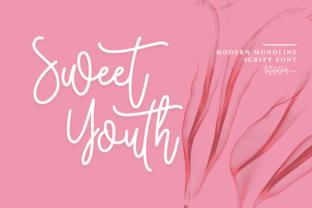
At its core, Sweet Heart is a handwritten-style script font. But its true purpose goes deeper than simple mimicry of pen strokes. The font is engineered to evoke a specific feeling: romantic tenderness. Its characters often feature gentle curves, soft connections between letters, and a flowing baseline that feels natural and unhurried. This isn't the sharp, modern script of a corporate logo; it’s the deliberate, caring handwriting of a love letter or a cherished diary entry. The value lies in its ability to immediately set a mood, bypassing plain text to communicate emotion before the reader even absorbs the words.
Why might someone seek out such a font? The appeal is broad. It supports the need to personalize and to connect on an emotional level. In a digital age saturated with clean, geometric designs, Sweet Heart provides a counterpoint—a human touch. It solves the problem of projects feeling too sterile or impersonal. Whether you're a blogger wanting your headers to feel more approachable, a small business owner crafting wedding invitations, or a hobbyist designing a scrapbook page, this font helps bridge the gap between digital creation and heartfelt expression.
Practical Uses Across Creative and Professional Landscapes
The applications for Sweet Heart are surprisingly versatile, extending beyond obvious romantic contexts. Its unique look can be a strategic design choice in many scenarios.
Consider a freelancer designing a brand for a boutique bakery, a mindfulness coach, or a family-oriented café. Using Sweet Heart for the logo or key marketing phrases can instantly convey warmth, care, and a homemade quality. Educators might use it to create engaging, friendly titles for worksheets or learning materials aimed at younger students, making the content feel more inviting. For digital creators, it’s perfect for YouTube video titles about personal stories, podcast artwork discussing relationships, or social media graphics for special announcements like engagements or birthdays.
- For Personal Projects: Wedding websites, custom greeting cards, photo album captions, personalized gifts.
- For Creative Work: Book covers for romance novels, poetry blog headers, art print quotations, composer’s sheet music titles.
- For Commercial Use: Branding for niche lifestyle products (soaps, candles), menu headings for intimate restaurants, packaging for handcrafted goods.
The key is alignment. Sweet Heart won’t fit a technical manual or a financial report, but where emotional resonance is a goal, it becomes an invaluable asset.
Getting Started with Sweet Heart: Key Considerations
Before integrating Sweet Heart into your work, a few practical observations will help you use it effectively. First, recognize that its strength is in impactful, limited use. Due to its decorative nature, it’s best employed for headlines, titles, logos, or short phrases, not for long blocks of body text. This ensures the romantic feel enhances readability rather than hindering it.
Second, pay attention to pairing. Sweet Heart shines when contrasted with a simpler, very legible font for your main content. A clean sans-serif or classic serif font provides a stable foundation, allowing the script to stand out as a beautiful accent. This contrast is a fundamental principle of good design.
Also, consider the context’s authenticity. If your project’s message is genuinely personal, sentimental, or artistic, Sweet Heart will feel authentic and enhance your communication. If forced into an unrelated context, it may feel incongruous. The font inspires a specific look, so let that inspiration guide you toward projects where its loveliness is a natural fit.
Embracing a Unique Typographic Voice
Learning to use a font like Sweet Heart is about more than technical installation. It’s about developing an eye for tone alignment. Start by experimenting with it on a personal project—design a holiday card or a single social media post. Notice how it changes the perception of your words. Does the message feel softer? More intimate? That’s the effect you can harness professionally.
For entrepreneurs and marketers, this means understanding your brand’s emotional voice. If your business story is built on care, craftsmanship, or personal connection, Sweet Heart can be a visual shorthand for that story. It tells your audience something about your values before they read a single sentence.
Ultimately, Sweet Heart represents a choice in digital communication. In a landscape often focused on efficiency and data, it offers a path back to beauty and feeling. It allows beginners and professionals alike to add a layer of unmistakable humanity to their creations, proving that in design, sometimes the most practical tool is one that simply makes things look, and feel, lovingly made.